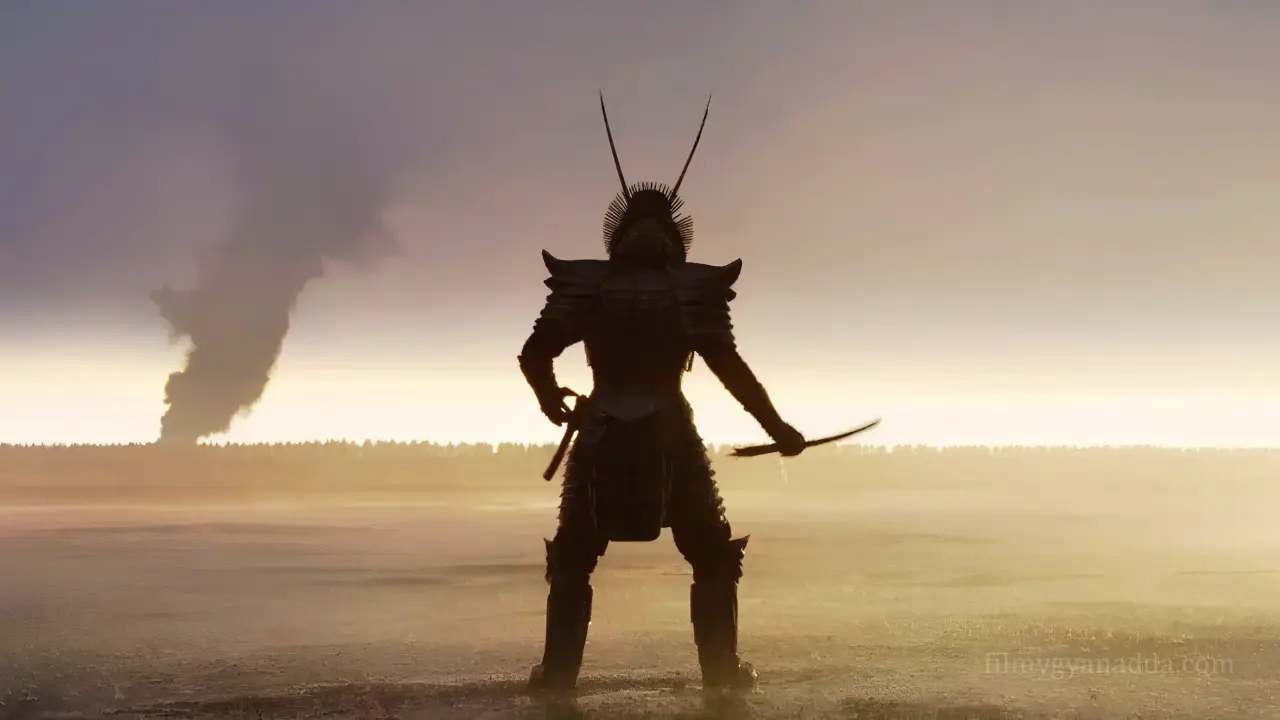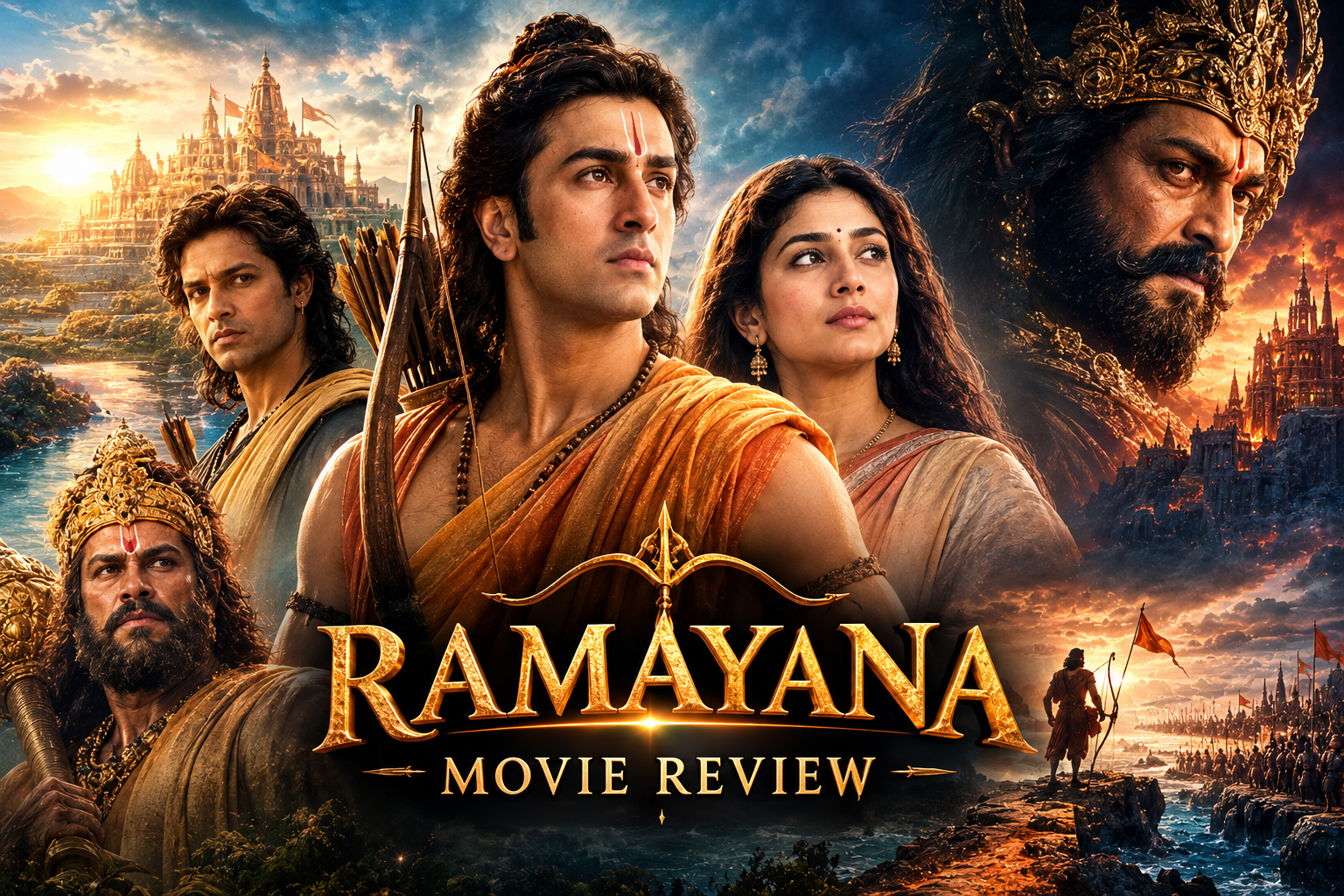
Ramayana is one of the most ambitious Indian cinematic projects of 2026. Directed by Nitesh Tiwari, this mythological epic brings the timeless story of Lord Rama, Goddess Sita and Ravana to the big screen with a remarkable ensemble cast, large-scale visual effects and music by A.R. Rahman and Hans Zimmer.
Starring Ranbir Kapoor as Lord Rama, Sai Pallavi as Sita and Yash as Ravana, the film has attracted enormous attention because of its cultural significance and cinematic ambition. With Ravi Dubey playing Lakshmana and Sunny Deol appearing as Hanuman, the movie attempts to introduce one of India’s greatest epics to a new generation while giving longtime admirers a fresh theatrical experience.
Released in theatres on November 5, 2026, Ramayana has already generated discussion among audiences and critics. Early reactions praise its visual scale, performances and music, although some reviewers have questioned its screenplay, pacing and occasional artificial-looking visual effects.
This review explores the story, performances, direction, cinematography, music, visual effects and overall theatrical experience.
Ramayana Movie Story: A Timeless Battle Between Dharma and Adharma
The story of Ramayana follows the journey of Prince Rama, the eldest son of King Dasharatha of Ayodhya. Known for his discipline, courage, kindness and commitment to righteousness, Rama is loved by the people of his kingdom.
His life takes an unexpected turn when circumstances surrounding the royal succession lead to his exile for fourteen years. Rather than challenge his father’s promise, Rama accepts the decision and leaves Ayodhya.
His wife, Sita, chooses to accompany him, while his younger brother Lakshmana also joins the journey. Together, they enter the forest, where their lives become increasingly complicated by unexpected encounters and dangerous forces.
The story eventually brings them into conflict with Ravana, the powerful king of Lanka. Following Sita’s abduction, Rama’s journey becomes a mission to rescue her and confront the forces threatening righteousness.
What makes this narrative special is that it is not simply a story about a powerful prince fighting an evil king. It is an exploration of relationships, promises, sacrifice, responsibility and the meaning of dharma.
The film attempts to bring these familiar events to life through large-scale production, emotional scenes and fantasy-inspired action.
Ranbir Kapoor as Lord Rama: A Performance Built on Restraint
Ranbir Kapoor carries enormous responsibility as Lord Rama. The character is deeply respected across generations, so portraying him requires more than physical transformation or impressive action sequences.
Ranbir’s performance relies on calm expressions, controlled body language and emotional restraint. Instead of presenting Rama as an aggressive warrior in every scene, he focuses on the character’s patience, compassion and sense of responsibility.
This approach is particularly important because Rama’s strength is not limited to his ability to fight. His decisions, relationships and commitment to doing what is right define him.
The emotional scenes involving Dasharatha and Rama’s departure from Ayodhya provide some of the film’s most affecting moments. Ranbir communicates the character’s sadness without making the performance unnecessarily dramatic.
India Today’s review particularly praised the quiet conviction he brings to Rama, noting how he gradually settles into the character.
For Ranbir Kapoor, Ramayana represents a major departure from many of his contemporary roles. It is a performance that depends on dignity and restraint rather than the familiar energy of a modern action hero.
Sai Pallavi as Sita: Grace, Courage and Inner Strength
Sai Pallavi plays Goddess Sita, one of the most important characters in the epic.
Sita is often remembered for her devotion, patience, dignity and courage. However, a modern cinematic interpretation also has the opportunity to explore her individuality and strength.
Sai Pallavi brings simplicity and emotional sincerity to the role. Her expressions and natural screen presence help establish a connection with the audience without relying on exaggerated gestures.
One particularly interesting aspect of the film’s characterisation is its attempt to present Sita as more than a character who simply reacts to the decisions of others. She is portrayed with agency, determination and courage.
Her relationship with Rama provides the emotional foundation of the story. Their moments together help balance the larger conflicts and action sequences.
The film also gives Sita opportunities to demonstrate her strength during difficult situations. This makes her an important part of the narrative rather than merely a supporting character.
Sai Pallavi’s performance is one of the film’s major attractions and adds considerable emotional depth to the epic.
Yash as Ravana: The Powerful Antagonist
One of the most anticipated casting decisions was Yash as Ravana.
After becoming internationally recognised through the KGF franchise, Yash enters a completely different cinematic world with this mythological character.
Ravana is not an ordinary villain. He is a powerful ruler, a knowledgeable scholar and a formidable warrior whose arrogance and misuse of power ultimately become his downfall.
Yash brings an imposing screen presence to the role. His physical appearance, expressions and commanding personality help establish Ravana as a powerful opponent.
The character requires a careful balance between intelligence, pride, ambition and cruelty. If Ravana is portrayed as simply evil, the emotional and philosophical dimensions of the conflict become less interesting.
Yash’s performance benefits from the character’s larger-than-life personality. His presence gives the story an important counterpoint to Ranbir Kapoor’s quieter portrayal of Rama.
The contrast between these two characters is one of the film’s strongest dramatic elements.
Ravi Dubey as Lakshmana and the Supporting Cast
Ravi Dubey plays Lakshmana, Rama’s devoted younger brother and constant companion.
Lakshmana is an important emotional presence throughout the story. His loyalty to Rama, concern for Sita and readiness to face danger make him much more than a secondary warrior.
Ravi Dubey brings energy and emotion to the character. His performance helps communicate the strong bond between the brothers, particularly during moments of uncertainty and danger.
Sunny Deol’s appearance as Hanuman is another major attraction. Hanuman represents devotion, courage, humility and extraordinary strength. His character has enormous importance in the wider Ramayana narrative, and audiences will naturally be interested in seeing how this iconic figure is brought to life.
The supporting ensemble also includes performers such as Arun Govil, Lara Dutta, Kunal Kapoor, Sheeba Chaddha and Rakul Preet Singh.
The cast provides the film with a broad range of characters, helping establish the kingdoms, relationships and conflicts that form the foundation of the epic.
Nitesh Tiwari’s Direction: An Ambitious Cinematic Vision
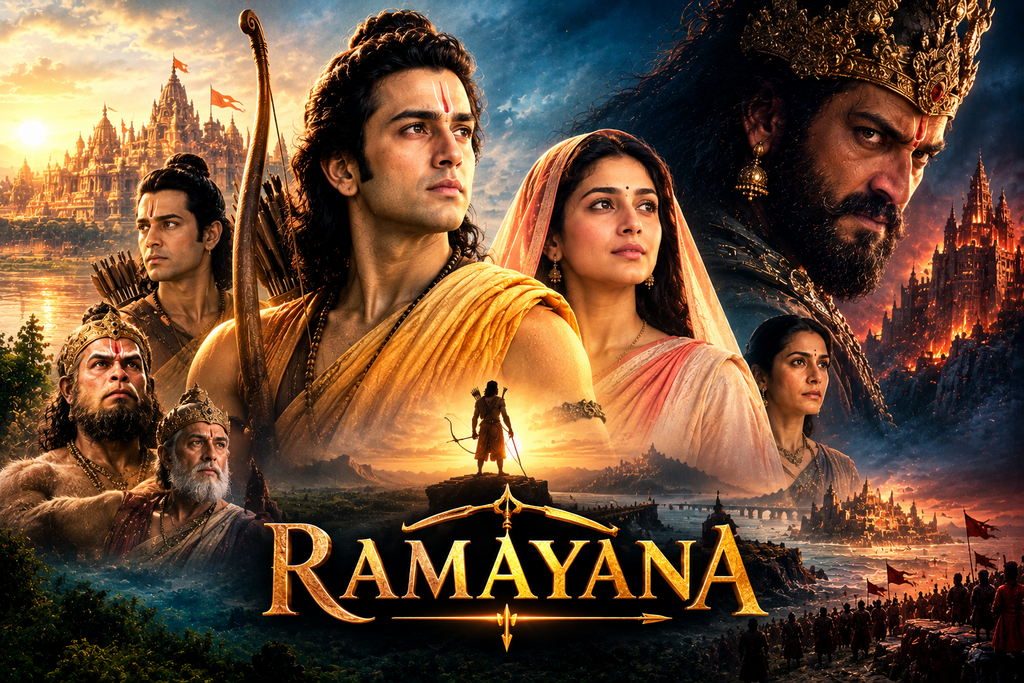
Directing Ramayana is a considerable responsibility because the story is already familiar to millions of people.
Nitesh Tiwari has attempted to combine traditional storytelling with the scale and visual language of contemporary international cinema.
The challenge is not simply to recreate familiar events. It is to make audiences emotionally connect with characters whose stories they may already know.
The film succeeds in several important moments, particularly when it focuses on family relationships and the difficult choices made by Rama.
However, the screenplay has some limitations. The first half moves quickly through several important developments, leaving certain relationships and emotional situations with less room to breathe than they deserve.
The second half feels relatively more focused as the characters move deeper into the central conflict.
The Hollywood Reporter India’s review also identified an important weakness: the film sometimes appears too cautious in its storytelling, relying on familiar moments instead of developing a more distinctive cinematic interpretation.
This does not make the film unsuccessful, but it does prevent some scenes from achieving their full emotional potential.
Visual Effects and Cinematography: A Grand World on Screen
The biggest attraction of Ramayana is undoubtedly its visual scale.
The film presents Ayodhya, forest landscapes, royal palaces, supernatural creatures and celestial locations through extensive visual effects and production design.
The intention is clearly to create a cinematic universe that feels larger than everyday reality.
Several action sequences are visually impressive, particularly those involving Rama’s battles with powerful enemies. The choreography, camera movement and scale of the environments contribute to an exciting theatrical experience.
The film also uses different visual styles to establish its earthly and celestial worlds.
However, the visual effects are not consistently successful. Some digital creatures and AI-assisted imagery look artificial, creating moments when the audience may become more aware of the technology than the fantasy being presented.
This is an important limitation because mythology requires visual imagination, but it also needs convincing execution.
India Today praised the film’s ambition and many of its visual achievements while pointing out that certain artificial-looking images interrupt the experience.
Despite these shortcomings, the overall production remains one of the most ambitious visual efforts in Indian cinema.
Music and Background Score: A.R. Rahman Meets Hans Zimmer
The music of Ramayana is another major talking point.
The collaboration between A.R. Rahman and Hans Zimmer brings together two composers with very different musical backgrounds.
Rahman’s work has a strong connection with Indian musical traditions, while Zimmer is known for creating expansive orchestral scores for international cinema.
Their combined approach gives the film opportunities to move between emotional melodies, devotional atmosphere and large-scale cinematic music.
The background score is particularly effective during several action sequences. It adds intensity to important confrontations and helps create a sense of scale.
The songs also gain additional meaning when experienced alongside the visuals and narrative.
A film of this magnitude needs music that supports its emotional and spiritual dimensions without overwhelming the storytelling.
Although some musical choices may divide audiences, the collaboration remains one of the project’s most interesting creative elements.
Ramayana’s Emotional Impact
Beyond the action and visual effects, the strongest moments of Ramayana come from its emotional storytelling.
The relationship between Rama and Dasharatha is particularly important. A father’s love for his son, combined with the painful consequences of a promise, gives the story a human dimension.
Similarly, the relationship between Rama and Sita helps establish the emotional stakes of the journey.
Lakshmana’s devotion adds another layer, demonstrating how family relationships can become a source of strength during difficult circumstances.
These moments remind viewers that the Ramayana is not merely a battle between two powerful forces. It is also a story about ordinary emotions placed within extraordinary circumstances.
The film is most effective when it allows these relationships to develop naturally rather than depending entirely on dramatic music and visual spectacle.
Ramayana Movie Review: What Works and What Doesn’t?
There are several reasons why Ramayana deserves attention.
What works well:
- Ranbir Kapoor delivers a restrained and sincere portrayal of Lord Rama.
- Sai Pallavi brings emotional depth and strength to Sita.
- Yash creates an imposing presence as Ravana.
- Ravi Dubey makes a strong impression as Lakshmana.
- The production design creates an ambitious mythological world.
- The music adds scale and emotional intensity.
- Several action sequences offer a memorable theatrical experience.
What could have been better:
- Certain sections of the screenplay move too quickly.
- Some character interactions need greater emotional development.
- A few visual effects look artificial.
- The dialogue and staging occasionally feel too cautious.
- The long runtime may test the patience of some viewers.
The film’s strengths are substantial, but its weaknesses prevent it from becoming a completely satisfying cinematic experience.
Is Ramayana Worth Watching in Theatres?
Yes, particularly if you enjoy Indian mythology, large-scale fantasy films and stories with emotional and cultural significance.
The theatrical presentation is important because the film’s landscapes, action sequences and musical score are designed to be experienced on a large screen.
However, viewers should approach it as a cinematic adaptation rather than expecting every familiar detail to be presented exactly as they remember it from traditional retellings.
The film takes creative decisions in its visual presentation and characterisation. Some viewers may appreciate these choices, while others may prefer a more traditional approach.
For families, mythology enthusiasts and fans of the lead actors, Ramayana offers plenty of reasons to consider a theatrical visit.
Final Verdict: Ramayana Movie Review 2026
Ramayana is an ambitious mythological film that attempts to bring an extraordinary Indian epic to a new generation of cinema audiences.
Ranbir Kapoor delivers a thoughtful performance as Lord Rama, Sai Pallavi adds emotional sincerity to Sita, and Yash brings considerable screen presence to Ravana. Ravi Dubey also contributes a memorable portrayal of Lakshmana.
The production’s scale, cinematography and musical ambition make several sequences genuinely impressive. At the same time, uneven pacing, cautious storytelling and occasional visual effects problems keep the film from reaching its full potential.
Its greatest achievement is its attempt to balance the familiar spiritual and emotional themes of the Ramayana with the possibilities of modern filmmaking.
For audiences who appreciate mythology and epic cinema, this is a theatrical experience worth considering.
Overall Rating: 3.5/5
Movie: Ramayana
Director: Nitesh Tiwari
Lead Cast: Ranbir Kapoor, Sai Pallavi, Yash
Supporting Cast: Ravi Dubey, Sunny Deol, Arun Govil, Lara Dutta, Kunal Kapoor
Genre: Mythological, Fantasy, Drama
Release Date: November 5, 2026
Language: Hindi
Verdict: A visually ambitious mythological epic with impressive performances and some storytelling weaknesses.
Frequently Asked Questions About Ramayana Movie
1. Who plays Lord Rama in Ramayana (2026)?
Ranbir Kapoor plays Lord Rama in Nitesh Tiwari’s cinematic adaptation.
2. Who plays Sita in Ramayana?
Sai Pallavi portrays Goddess Sita.
3. Who plays Ravana in Ramayana?
Yash plays Ravana, the powerful king of Lanka.
4. Who directed Ramayana?
The film is directed by Nitesh Tiwari.
5. Is Ramayana worth watching?
The film is worth considering for audiences who enjoy mythology, fantasy, impressive visuals and emotionally driven storytelling.
6. What is the release date of Ramayana?
The film was released in theatres on November 5, 2026.