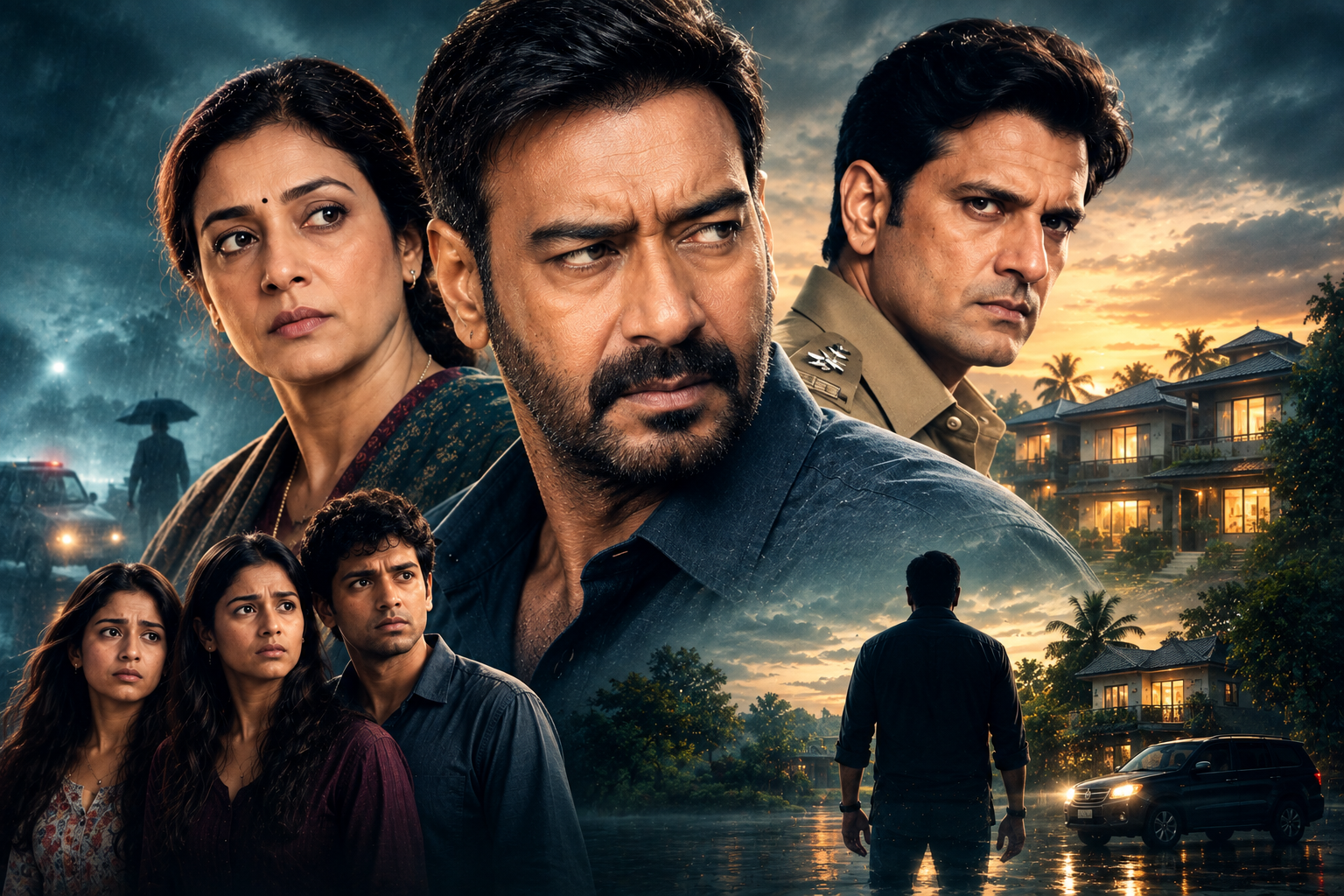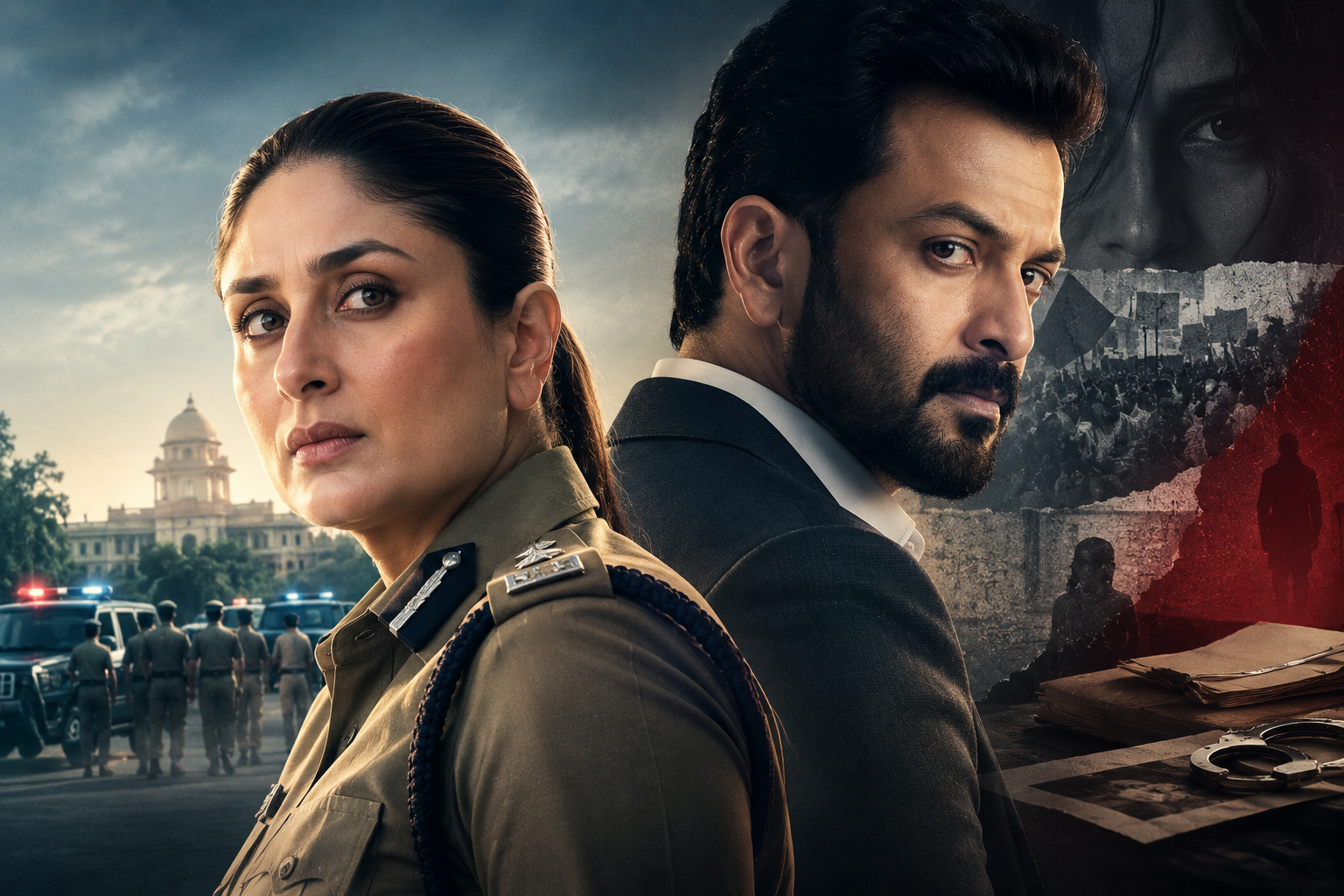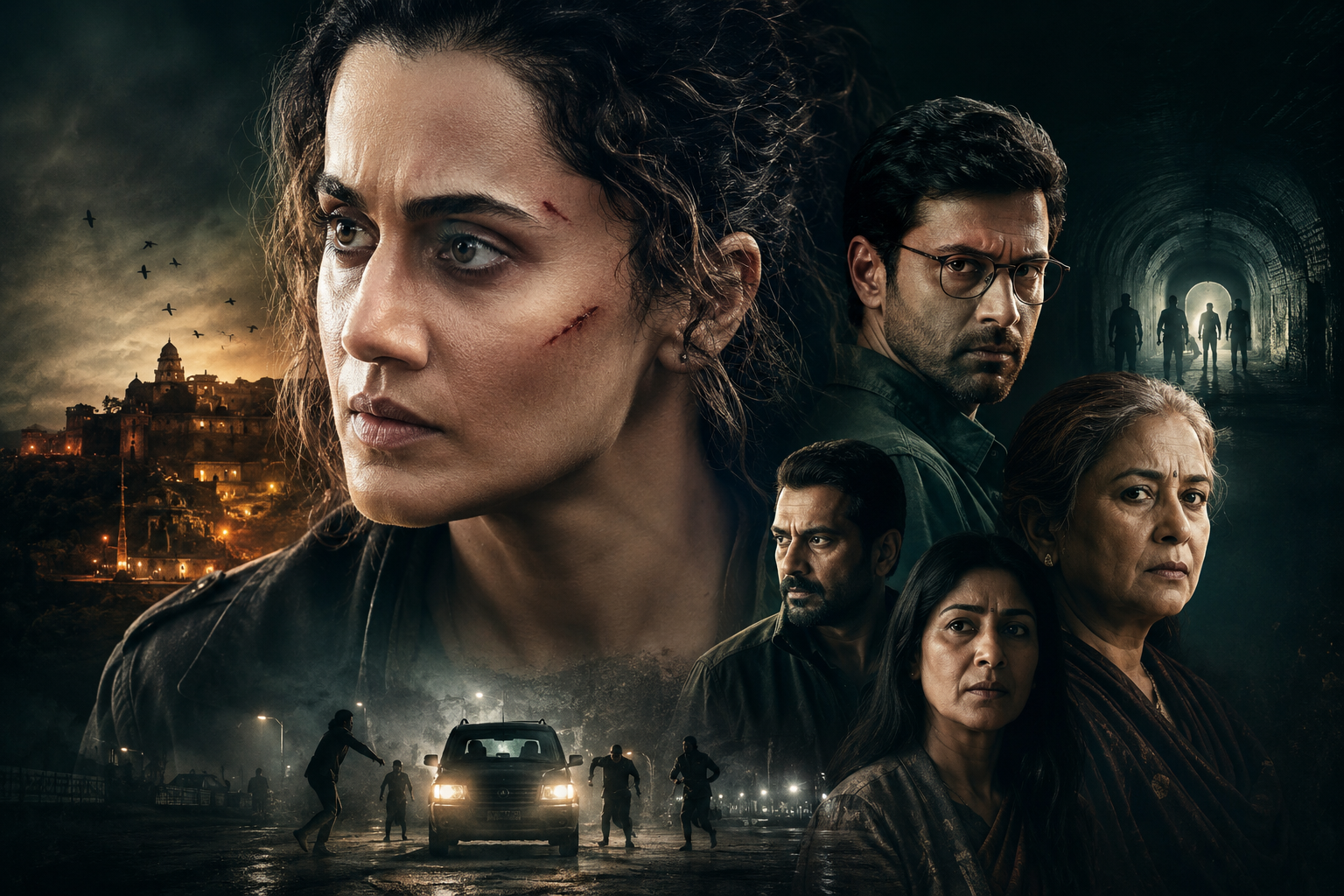

Gandhari is a Hindi action thriller directed by Devashish Makhija, starring Taapsee Pannu and Ishwak Singh in the lead roles. The film follows a mother’s desperate search for her kidnapped daughter and takes the audience into a mysterious world of crime, danger, and revenge. Released on Netflix on September 3, 2026, the movie attempts to combine emotional drama with action and mystery.
A Story Built Around a Mother’s Desperation
At the centre of Gandhari is Bani, a mother whose young daughter, Mishty, is abducted. What begins as a personal tragedy soon becomes a much larger investigation. Bani and her husband, Gokul, discover that the disappearance may be connected to a wider criminal network operating in the fictional town of Joypurra.
The film’s opening is one of its strongest aspects. It establishes the emotional stakes quickly and gives the audience a clear reason to care about Bani’s journey. Her determination to find her child creates an immediate connection, while the mysterious setting adds curiosity about what is really happening in the town.
However, as the story progresses, Gandhari begins to introduce several additional ideas. Along with the kidnapping investigation, the film explores a shadowy criminal world, mythology, disguises, and revenge. These elements give the movie an unusual identity, but they also make the narrative feel increasingly crowded.
Taapsee Pannu Is the Film’s Biggest Strength
Taapsee Pannu carries much of Gandhari on her shoulders, and her performance is one of the main reasons the film remains watchable. She brings intensity to Bani’s determination and manages to communicate the character’s vulnerability during the more emotional moments.
What works particularly well is the contrast between Bani’s emotional pain and her willingness to fight back. The film gives Pannu several action-heavy moments, but she also gets opportunities to show the fear and desperation behind the character’s mission. Her committed performance helps keep the central story engaging even when the writing becomes less convincing.
Ishwak Singh, who plays Gokul, delivers a sincere performance, although his character is not given as much depth as the lead. The supporting cast includes Mita Vashisth, Chhaya Kadam, Jatin Sarna, and Swastika Mukherjee, with several performers adding strength to the film’s tense atmosphere.
The Action Has Energy, but the Writing Holds It Back
One of the film’s biggest attractions is its action. Gandhari clearly wants to be a stylish, high-intensity thriller, and some of its action sequences are engaging. The cinematography and production design also help create a distinctive world, particularly through the fictional town and its mysterious surroundings.
The problem is that the action does not always feel fresh. Several chase and escape situations follow familiar thriller patterns, reducing the suspense. Instead of making every sequence feel like a natural development of the story, the film sometimes appears to be moving from one set piece to another.
This is where the screenplay becomes the film’s biggest weakness. The story has an interesting starting point, but it struggles to maintain the same level of tension throughout. Some twists feel predictable, while other developments are difficult to accept. The third act, in particular, has been criticised for confusing turns and a lack of convincing emotional payoff.
A Promising World That Needed More Depth
The fictional town of Joypurra is one of the more interesting elements of Gandhari. It gives the film a setting that feels different from the usual urban thriller. The mysterious atmosphere and the presence of characters with hidden identities create a sense that there is more to the town than what initially appears.
Unfortunately, the film does not always make the most of this world-building. The mythology and unusual elements are intriguing, but they sometimes feel like separate ideas placed inside the same story rather than parts of one smoothly connected narrative.
This makes Gandhari feel caught between two styles: a conventional action thriller and a more experimental OTT mystery. It has the ambition to be different, but the execution does not always bring those ideas together successfully.
Does the Emotional Drama Work?
The emotional foundation of Gandhari is strong. A mother searching for her missing child is a premise that naturally creates urgency and sympathy. The film also attempts to explore the darker side of child trafficking and the dangers surrounding vulnerable children.
Yet the emotional impact is not as powerful as it could have been. Several reviewers have pointed out that the film’s action, twists, and additional plot elements sometimes overshadow the central relationship between Bani and her daughter.
This is disappointing because the film’s best moments are the ones that focus on Bani’s personal struggle. When the story stays close to her fear, determination, and emotional pain, it feels more convincing. When it moves too far into complicated plot developments, the connection becomes weaker.
Final Verdict
Gandhari is not a complete failure, but it is also not the gripping thriller it could have been. The film has a promising premise, a distinctive setting, and a strong central performance from Taapsee Pannu. Its action sequences provide energy, and the supporting cast adds value to the overall experience.
However, the screenplay struggles with familiar twists, uneven pacing, and an emotional core that is not developed strongly enough. The film tries to combine too many ideas, and this ultimately weakens its impact.
My rating: 2.5/5
If you enjoy action thrillers led by strong female characters, Gandhari may be worth a watch. But if you are expecting a tightly written, emotionally powerful revenge drama, the film may leave you wanting more.
Verdict: A promising concept with a committed lead performance, but a screenplay that loses its way.